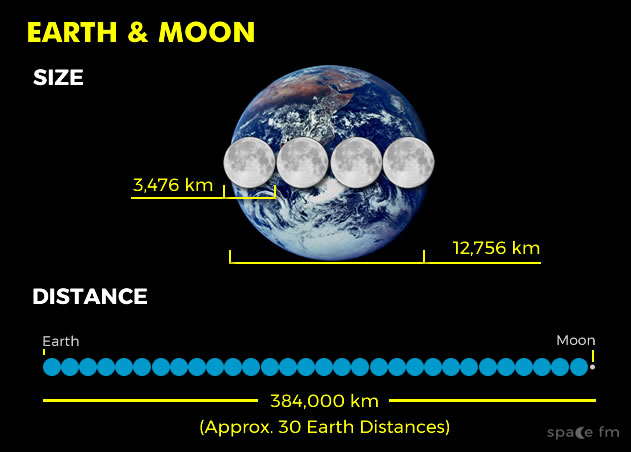
There’s something wonderfully whimsical about the phrase "to the moon and back." It’s a metric we toss around in love letters, bedtime stories, and daydreams, yet most of us have never stopped to wonder: how many miles is it, really? This isn’t a question for rocket scientists alone; it’s a delightful little puzzle that connects astronomy with our own sense of scale. The best part? The answer is surprisingly straightforward, and it helps us appreciate both the vastness of space and the tender human gesture of measuring love in miles. Whether you’re a curious kid, a romantics at heart, or just someone who enjoys a good cosmic fact, this topic offers a satisfying blend of science and sentiment.
The main purpose of knowing this distance is to ground an abstract idea in something tangible. When a parent tells a child, "I love you to the moon and back," they’re promising an unimaginably long journey of affection. But by putting a number to it—roughly 477,710 miles round trip—the phrase becomes a charming fact you can share at trivia night or while gazing at the night sky. This number isn’t static, either. The moon’s orbit is elliptical, meaning the actual distance varies: at its closest (perigee), a round trip is about 452,000 miles, while at its farthest (apogee), it stretches to around 504,000 miles. That’s a 50,000-mile difference just from a slight orbital wobble!
You might recognize this idea from popular culture, like the classic book Guess How Much I Love You, where Little Nutbrown Hare stretches his arms wide. It’s a metaphor that endures because it’s both simple and profound. In practical terms, it also helps us grasp the scale of everyday travel: driving that round trip at highway speeds (60 mph) would take a staggering 330 days without stopping for gas. For runners? At a 10-minute-mile pace, you’d be jogging for nearly a decade. Suddenly, the moon feels both impossibly far and wonderfully close when we put it in human terms.
To get started appreciating this distance yourself, try a simple exercise: look up the moon’s current phase and its distance using a free astronomy app like SkyView or Stellarium. This makes the number personal. For instance, tonight if the moon is 240,000 miles away, you can say, "A round trip would be 480,000 miles—that’s like flying from New York to Los Angeles 198 times." That kind of comparison turns a dry figure into a vivid mental picture. You can also track the moon’s elliptical path over a month to see the distance change in real time—a satisfying way to feel the rhythm of our nearest neighbor.
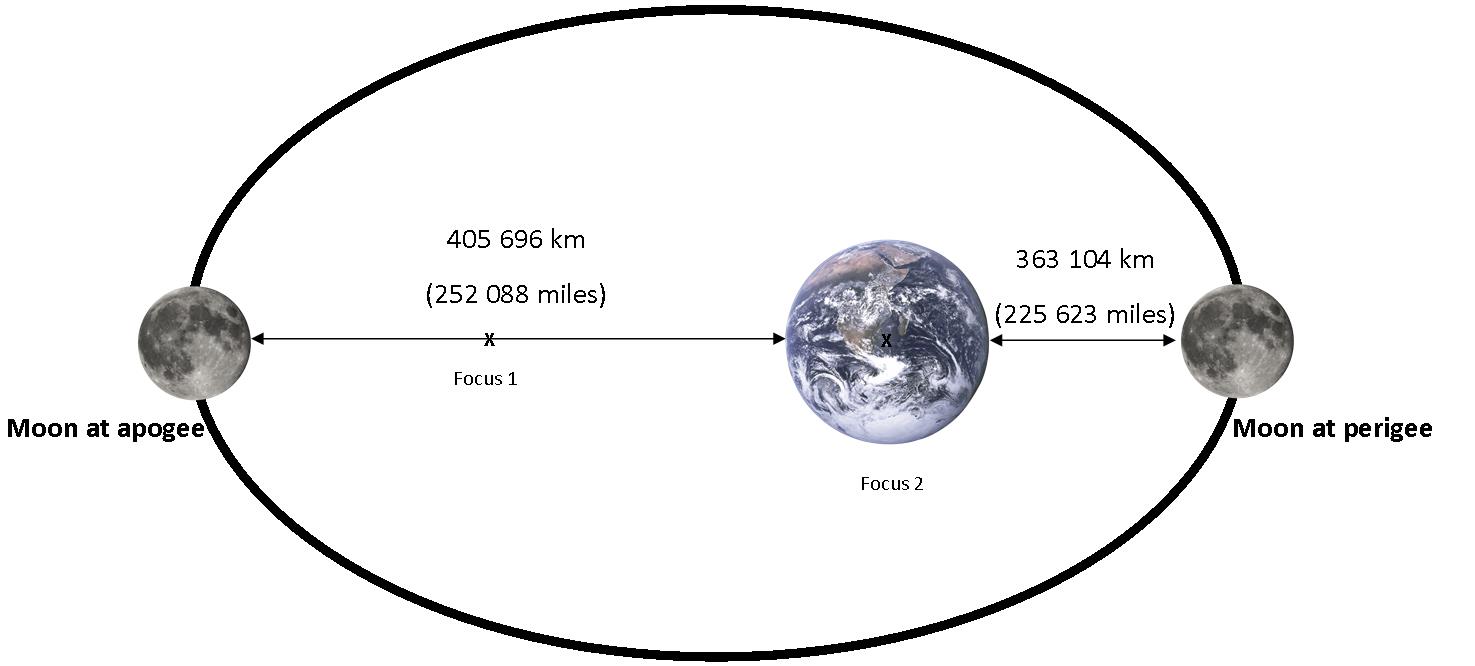 How far away is the Moon? Distance between Earth and Moon explained
Want to share this with others? Make it a game. Challenge a friend to guess the distance, then give them a hint: "It’s roughly the same as ten trips around Earth’s equator." Use visual aids like a piece of string: if Earth is a marble, the moon is a tennis ball about seven feet away. For book lovers, pair this fact with a reading of The Moon’s Our Nearest Neighbor or a quirky poem. The key is making the abstract feel real without losing the magic. After all, numbers are just tools; the wonder is in the journey itself—whether it’s a literal voyage or a heartfelt metaphor.
Ultimately, the mileage between Earth and the moon is a bridge between science and poetry. It reminds us that the most profound human sentiments—love, curiosity, awe—can be expressed in concrete terms without losing their spark. So next time you hear someone say "to the moon and back," you can smile, knowing it’s roughly half a million miles of commitment. And if you ever want to impress at a dinner party, just drop that the moon moves about 1.5 inches farther away from Earth each year—so the distance is always growing, just like our affection for that glowing silver rock in the sky.